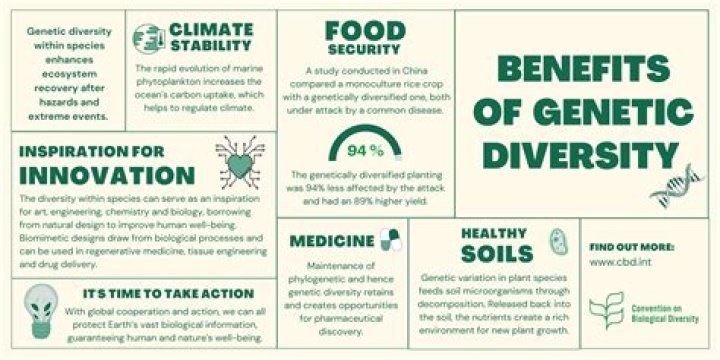
Many researchers define genetic diversity as the amount and extent of genetic variability among populations whereas biodiversity refers to the diversity of all organisms in a given ecosystem at a given time.
Is genetic biodiversity?
Genetic diversity is the biological variation that occurs within species. It makes it possible for species to adapt when the environment changes. … Biological variation at the DNA-level forms the basis for all biodiversity.
What are the 4 types of biodiversity?
- Species Diversity. Every ecosystem contains a unique collection of species, all interacting with each other. …
- Genetic Diversity. Genetic diversity describes how closely related the members of one species are in a given ecosystem. …
- Ecosystem Diversity. …
- Functional Diversity.
Is genetic diversity a measure of biodiversity?
Intraspecific, genetic diversity is rarely used as a measure for biodiversity, although it may reflect the adaptive potential of species in changing environments. … Species richness is the most widely used measure for biodiversity assessment.What is genetic diversity and what are the different types of genetic diversity?
Genetic Diversity refers to the range of different inherited traits within a species. In a species with high genetic diversity, there would be many individuals with a wide variety of different traits. Genetic diversity is critical for a population to adapt to changing environments.
What is the difference between genetic diversity species diversity and ecosystem diversity?
Genetic diversity are the differences in DNA among individuals within a species or population. Species diversity is the number or variety of species in the world or in a particular region. Ecosystem diversity is the number or variety of ecosystems within a particular area.
Which is an example of genetic diversity?
For example, the population of humans consists of individuals with different physical traits reflecting their genetic diversity. … Apart from between species, genetic diversity may also be observed among species. For instance, the population of dogs may consist of different breeds of dogs.
How is biodiversity measured in genetic levels?
Genetic diversity can be measured directly by looking at genes and chromosomes or indirectly by looking at physical features of the organisms and assuming they have a genetic basis. Using the genetic code is arguably the strongest method of measuring biodiversity as it is looking at the building blocks of life.How is genetic diversity measured?
Differences between species reflect genetic differences. … Variation within a species can be measured using differences in the base sequence of DNA or in the amino acid sequence of proteins. Biodiversity within a community can be measured using species richness and an index of diversity.
What is genetic diversity class 12?Genetic diversity in simple terms is the different types or variation of genes that are present in a population or in a given species. It can be said that the genetic diversity is a result of recombination in the genetic material as it leads to diversity or variation in the genetic makeup of the organisms.
Article first time published onWhich species are included under biodiversity?
Biodiversity refers to the variety of living species on Earth, including plants, animals, bacteria, and fungi.
What are some examples of species diversity?
So, some examples may include the presence of four or five different species of tree in a woodland forest, or perhaps 100 different species of fish, crustaceans and coral in a certain reef.
What is genetic diversity in ecology?
Genetic Diversity is the diversity of genetic characteristics (expressed or recessive) within a species (i.e. between individuals and populations of the same species). … Species Diversity is simply the number and relative abundance of species found in a given biological organisation (population, ecosystem, Earth).
Why is genetic variability important for biodiversity?
Genetic diversity serves as a way for populations to adapt to changing environments. With more variation, it is more likely that some individuals in a population will possess variations of alleles that are suited for the environment. Those individuals are more likely to survive to produce offspring bearing that allele.
What is genetic diversity class 10?
What is Genetic Diversity? Genetic diversity indicates a greater number of genetically different individuals within the same species. It is the way by which a population of organisms survive the changing environments.
What causes genetic diversity?
Genetic variation can be caused by mutation (which can create entirely new alleles in a population), random mating, random fertilization, and recombination between homologous chromosomes during meiosis (which reshuffles alleles within an organism’s offspring).
How do genetic diversity species diversity and ecosystem diversity work together in sustaining Earth's biodiversity?
Greater biodiversity in ecosystems, species, and individuals leads to greater stability. For example, species with high genetic diversity and many populations that are adapted to a wide variety of conditions are more likely to be able to weather disturbances, disease, and climate change.
What does genetic diversity enable species to do?
Genetic variation within a species can result from a few different sources. … Genetic variation in a group of organisms enables some organisms to survive better than others in the environment in which they live.
What is functional biodiversity?
Functional diversity is a component of biodiversity that generally concerns the range of things that organisms do in communities and ecosystems. … Choosing which traits to include in a particular measure of functional diversity will depend on the specific aims of a particular study.
Which is not a variety of biodiversity?
From the given question, the soil is not a variety of biodiversity.
How do you determine biodiversity?
Biodiversity can be measured at many different levels including genetic, species, community, and ecosystem. One way to measure biodiversity is to assess species richness of an ecosystem, which is the total number of distinct species within a local community.
What is high biodiversity?
High biodiversity is a habitat or ecosystem that has a high number of different species. Procedure. 1. Each team of 2 is given the animals that live in a 1 square meter area of a. particular habitat (beans, etc.
Which of the following defines species diversity?
Species diversity is defined as the number of species and abundance of each species that live in a particular location. The number of species that live in a certain location is called species richness.
What happens if there is no genetic diversity?
Without genetic variation, a population cannot evolve in response to changing environmental variables and, as a result, may face an increased risk of extinction. For example, if a population is exposed to a new disease, selection will act on genes for resistance to the disease if they exist in the population.
Why is human genetic diversity important?
Genetic diversity is important because it helps maintain the health of a population, by including alleles that may be valuable in resisting diseases, pests and other stresses. … If the environment changes, a population that has a higher variability of alleles will be better able to evolve to adapt to the new environment.